(I will preface this by saying that I strongly believe in, and personally thrive in, online spaces, particularly ones that are not owned by corporate giants run by quite blatantly evil people. This is not about criticizing online activity or saying that in-person engagement is The Only Way.)
I live near a decrepit old house that has lived a few lives. I only knew of this house starting in 1999, well before I moved to the neighbourhood, when it was a cafe and gallery. My best friend, who had just got her driver’s license a month before, was looking for places we could go in her mother’s car on Saturday nights. She heard of this place where we could sit and have (non-alcoholic) drinks and patisseries and watch live entertainment. It fit her hippie aesthetic and our collective sense of adventure. I brought my (film, of course) camera with me, the one that had the option of imprinting the date in bright orange digits in the bottom right corner, and took snapshots of my friends sitting in the cafe and goofing off on the walk back to the car afterwards, on a stretch of sidewalk that I have now passed probably thousands of times in my adulthood.
But the cafe is dead. I remember mourning it when it first closed in the early 2000s. It became a hair salon for a bit, when it went through a paint job to become bright green. That closed, and after that it’s been nothing identifiable except a mess. A task of covering the bright green with a dull bluish grey took many, many years to actually get around to being done. The fence was slowly destroyed by random troublemakers in the neighbourhood and was within the past couple of years just completely taken down. The lot makes its money by having parking spaces in the back where downtown workers put their cars for the day. The seclusion in a primarily residential area where the air is open but the lot itself isn’t easily spotted may make it worth having to navigate and abide by all the one-way streets and bike lanes in the area. But the house is not being used; it has neither been sold nor torn down. I don’t know what its fate is. I just wish it had one.
That is not only because of the nostalgia of that cafe and gallery from the previous century. It’s not only because it’s my neighbourhood. But those are both parts of this picture. Society as a whole has seen the decline of third spaces—locations that are neither home nor work, where people make time to go to and engage with people around them (or not, as mere ambience in these spaces provides value that can’t be achieved in the first or second spaces above from which these are respectively distinguished). There are many reasons for this: even going back a hundred years, the telephone and radio both meant people could get more staying at home; the television and internet and associated technologies of course intensified that in the Perfect Western Life designed for the Cold War and we have not backtracked since. People staying at work means they’re going to toil for the profit of others. People staying at home means they’re going to order in food in a way that pays a tech company for being the middleman who “coordinates” a restaurant with razor thin profit margins with a courier who will make less than minimum wage. Amazon has killed malls. A complex array of societal forces I cannot begin to explore in this essay with any meaningful depth has killed the church. Coffee shops come and go, are designed for limited capacity and quick exits of patrons, face high turnover in staff due to toxic environments and unlivable pay, and are replaced by major chains that bitter middle aged white men complain about but do nothing further to improve their community. Libraries get reduced funding, reduced hours, reduced enthusiasm from overworked staff who are expected to handle the consequences of colonial capitalism by being the only place that will give the marginalized a place to sit. These are things that have been taken away from us by design.
This is tangled up with so many other societal problems. If the property that house is on didn’t have enough space for a parking lot in the back, or there was adequate public transit that made parking far less valuable, would it lose interest from the people who only cared about money to be made from car-centric society and be sold to someone with a community-centred vision? If 15-minute cities were taken seriously, and not left as an idle fantasy used by far-right groups to conjure up new conspiracies out of old flavours where somehow the most benign idea of making policy decisions to encourage a healthier world became a plot by communists and/or Jews to eradicate white western identity, would even suburban residential neighbourhoods develop such amenities so people can connect with each other beyond their backyard fences? If we took public health seriously—as the covid pandemic killed a lot of remaining options for this kind of space—and improved ventilation or normalized proper PPE in more casual social spaces remove risks and open up spaces to more people who don’t feel safe going out?
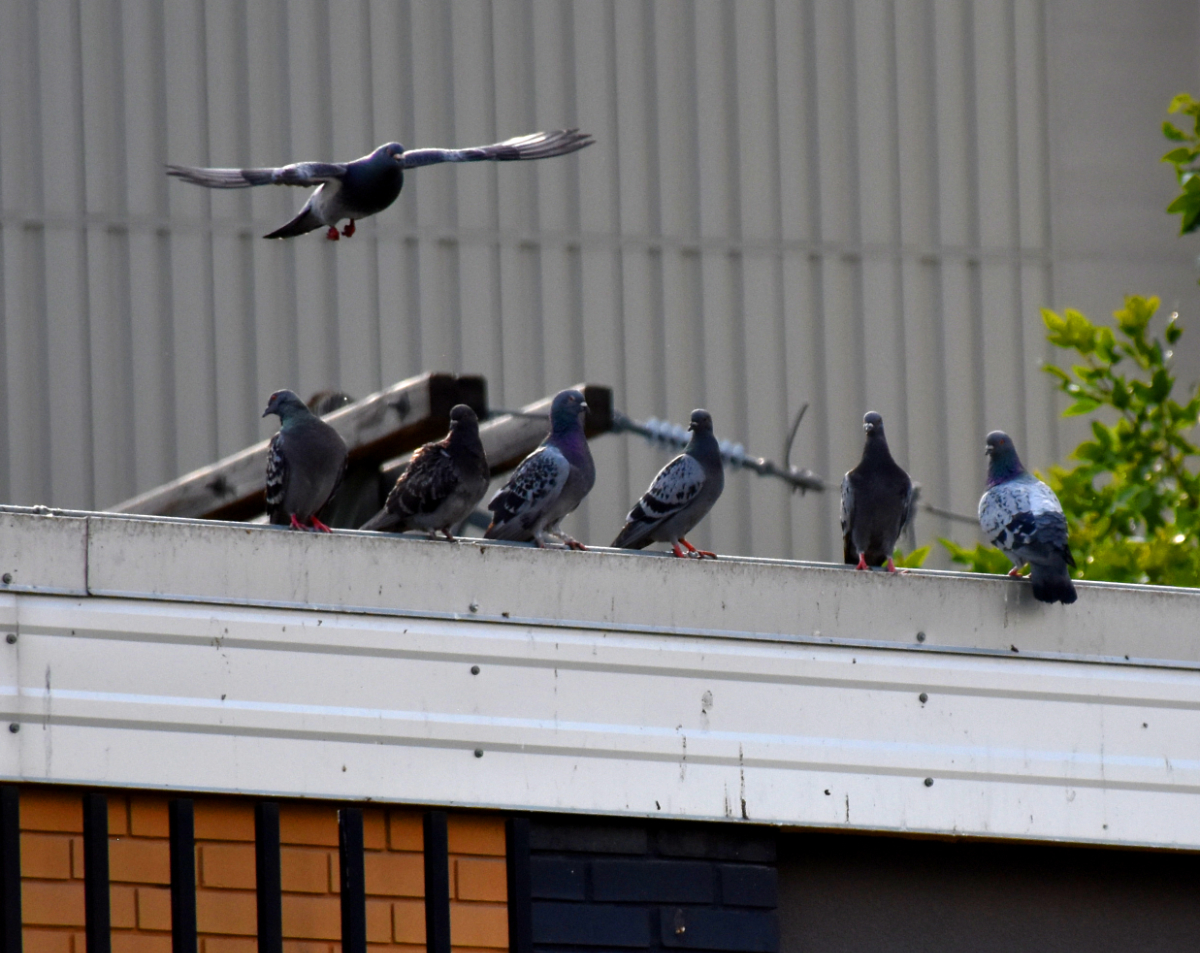
The header image to this essay was taken down the street from the decrepit ruins of what symbolized a beautiful outside world in my youth. Pigeons hang out on the roof of a walk-up apartment building and in the beams supporting a nearby overpass or the ground underneath. They engage with each other and choreograph synchronized flying exercises that are a beauty to see. They can come and go between these spaces they’ve established. Sparrows on my street fly in groups from shrub to shrub or find fences to perch upon. Geese and ducks have a few locations where they sit around together and honk or quack as they please. Squirrels run from tree to tree; bunnies hop from bush to bush. We can make movement normal. We can create spaces of comfort and support outside our homes.
All of this being said, there ARE places that try to do this. There are coffee shops that are designed to be collaborative and encourage creative activities no matter how long it means customers will sit there. There are organizations providing free space for community-led groups to meet and organize, both online and offline. There are libraries and community centres with programs that do help people stay engaged. We just don’t have enough of it, and spaces like that former cafe have the potential to add to this if we just shifted our values and pushed back against the capitalism that wants to keep us at work or at home.